End-to-End Nail Gel Manufacturing: Custom Formulation, Bespoke Bottles & Strict Quality Control

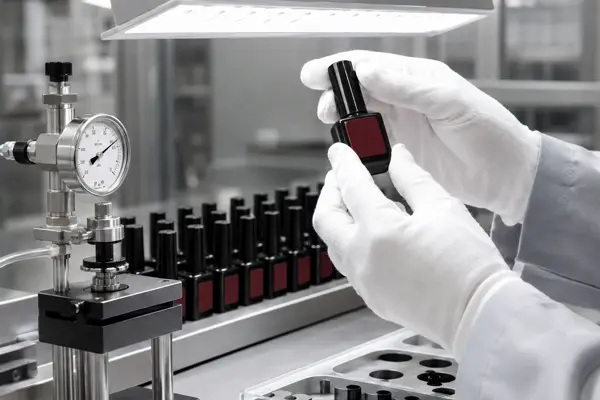
Elevate your product line with factory-direct nail gel manufacturing. We integrate advanced formulation labs, in-house bottle and brush customization, and multi-stage quality testing under one roof—ensuring batch-to-batch color accuracy, smooth application, and full EU/US regulatory compliance for every order.

Inside Our Nail Gel Manufacturing Process: 8 Precision Stages

From raw oligomer inspection to climate-controlled global shipping, every batch of gel polish undergoes a standardized 8-step production workflow engineered for color accuracy, curing stability, and zero contamination.

STEP 1: RAW MATERIALS & VACUUM RESIN MIXING
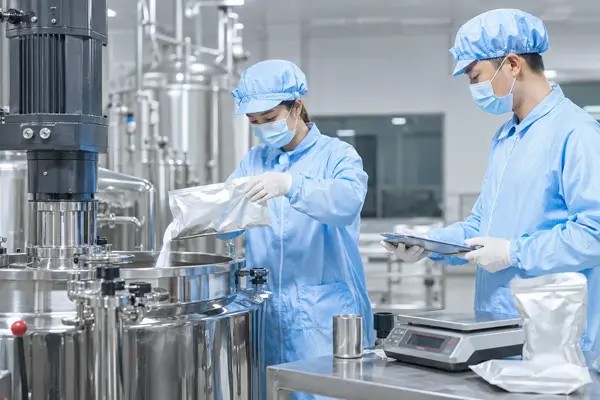
RAW MATERIALS & VACUUM RESIN MIXING for nail gel
We source cosmetic-grade oligomers, monomers, and photoinitiators from audited global suppliers, including HEMA-free and TPO-free raw materials. Inside a temperature-controlled, UV-shielded cleanroom, base resins are blended in sealed vacuum reactors to achieve uniform polymer viscosity while eliminating trapped air before color formulation.

STEP 2: COLOR MATCHING, DISPERSION & VACUUM DEGASSING
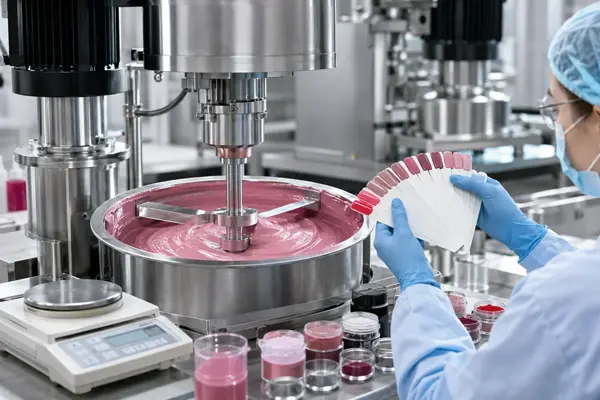
Using three-roll mills and high-speed vacuum dispersers, ultra-fine pigments, magnetic powders, and glitters are milled to micron-level smoothness and vacuum-degassed to prevent air bubbles during application. Colorists match every batch against master Pantone or custom client standards under standardized D65 daylight booths.

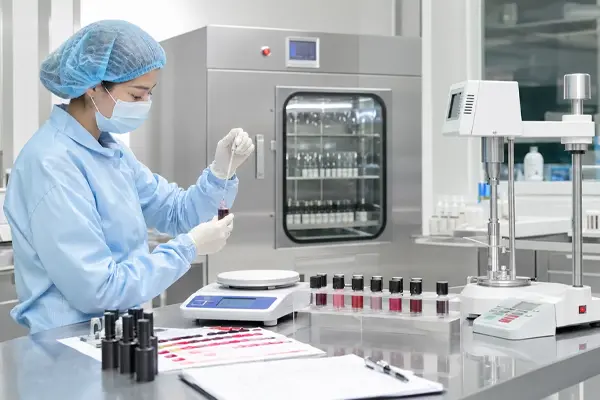
STEP 3: QC TESTING FOR NAIL GEL

Before bulk filling begins, lab technicians test semi-finished gel samples across key physical and performance metrics—including rotational viscosity (cPs), UV/LED curing speed, adhesion strength, shrinkage rate, and color opacity—releasing the batch only when all parameters match specifications.

STEP 4: PRODUCTION MATERIAL SORTING

PRODUCTION MATERIAL SORTING
Empty UV-blocking glass bottles, jars, aluminum tubes, caps, and precision brushes are sorted by SKU and inspected for dimensional tolerances. All containers undergo automated ionized air-washing and UV sterilization to eliminate dust particles and static before reaching the filling line.

STEP 5: AUTOMATIC FILLING FOR NAIL GEL
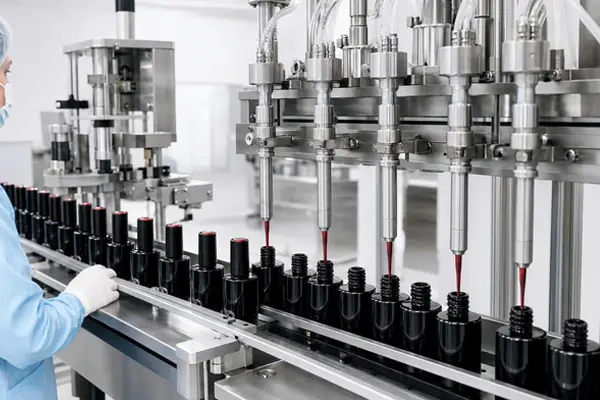
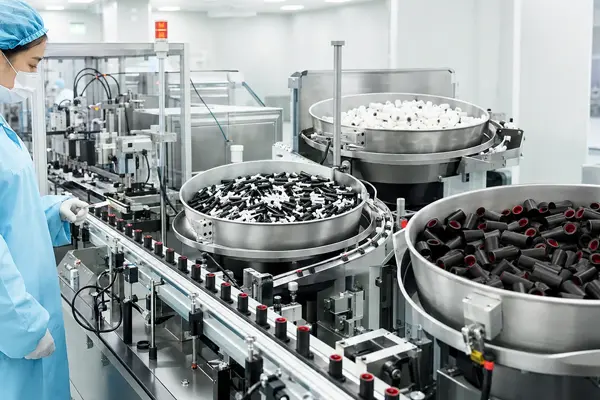
AUTOMATIC FILLING FOR NAIL GEL
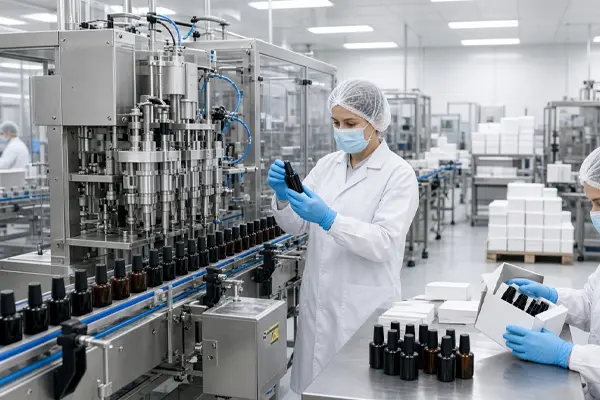
High-precision servo-driven filling machines dispense exact volumes into bottles, jars, or squeeze tubes inside a dust-free, UV-filtered cleanroom. Automated capping and torque-control systems immediately seal each container to lock out air, moisture, and stray UV light.

STEP 6: FINISHED GOODS INSPECTION & BATCH RETENTION
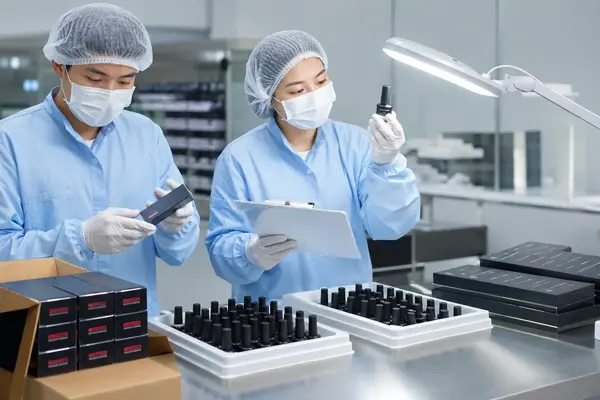
Every filled unit passes weight verification and visual inspection for cap alignment, print clarity, brush integrity, and zero leakage. Random finished samples undergo a final brush-out curing test, while sealed reference samples from every production batch are archived in our 24-month stability retention lab to track shelf-life consistency.

STEP 7: PRODUCT PACKAGING

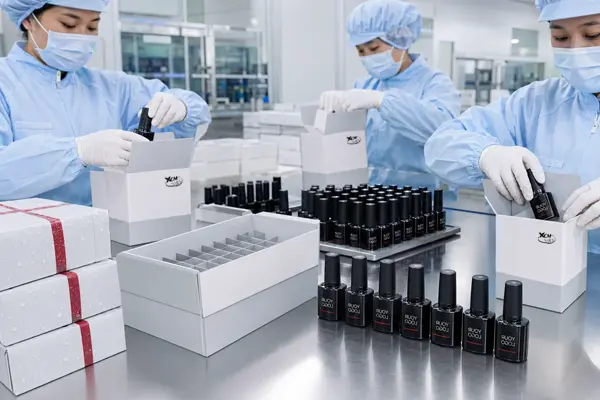
PRODUCT PACKAGING
Inspected units are fitted with batch-traceable lot codes, shade labels, and regulatory ingredient stickers, then packed into custom retail boxes, 6/12-piece display kits, or shock-absorbent corrugated inner cartons engineered to prevent glass breakage during transit.

STEP 8: CARGO TRANSPORTATION

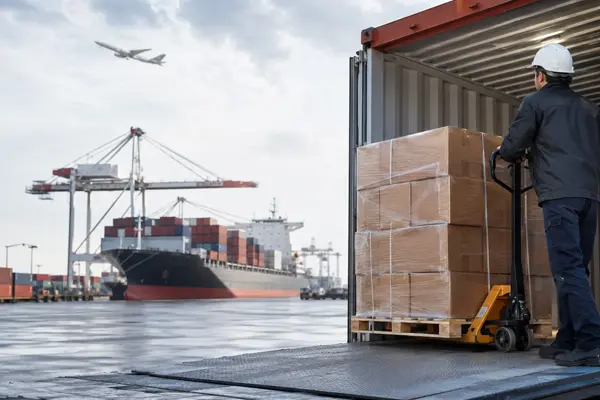
CARGO TRANSPORTATION
Finished pallets are stored in cool, dark warehouses and dispatched with full export documentation—including MSDS, CPSR, CPNP, and FDA records—via temperature-monitored air freight, sea FCL/LCL, or express courier directly to your warehouse or Amazon FBA center.

Custom Nail Gel Bottle Manufacturing & Packaging Process

UV-curable gel requires light-blocking, solvent-resistant packaging to protect formula integrity. Our in-house bottle production line handles everything from heavy-wall glass molding and opaque UV-shielding coating to high-temperature curing, precision logo printing, and custom shade labeling.

STEP 1: BOTTLE MANUFACTURING

BOTTLE MANUFACTURING
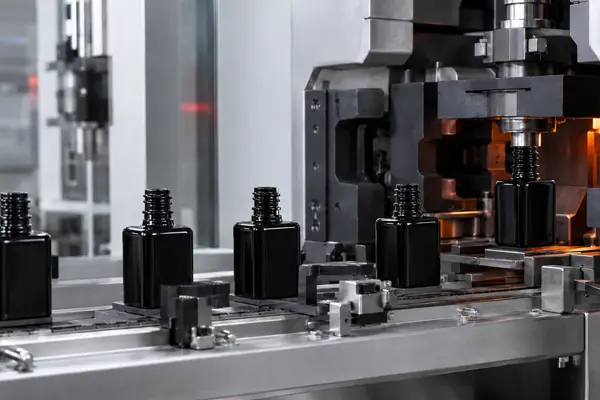
Bottles are molded from thick-walled, chemical-resistant cosmetic glass in standard capacities (5ml to 15ml) or custom proprietary silhouettes. Precision neck threading ensures an airtight seal with inner wipers and caps to prevent solvent evaporation and leakage during air or sea transit.

STEP 2: BOTTLE COLOR SPRAYING

BOTTLE COLOR SPRAYING
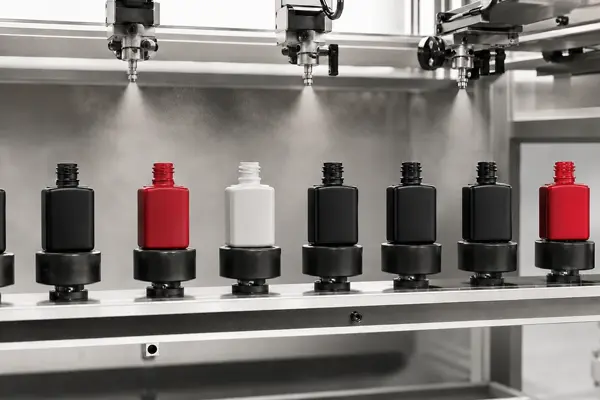
Automated electrostatic spray lines apply multi-layer opaque, matte, glossy, or pearl coatings across the glass exterior. This uniform pigment barrier blocks 100% of ambient UV light, preventing gel premature curing inside the bottle while matching your brand’s exact Pantone color palette.

STEP 3: BOTTLE BAKING

BOTTLE BAKING
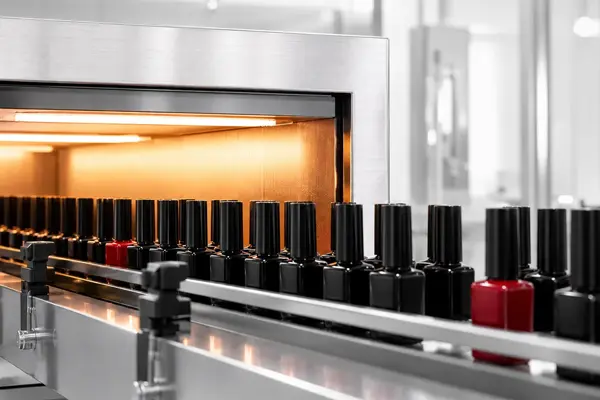
Sprayed bottles pass through high-temperature curing ovens to thermally bond the color coating onto the glass surface. This baking stage ensures superior scratch resistance and prevents peeling or discoloration when exposed to acetone, 75% alcohol, and daily salon disinfectants.

STEP 4: BOTTLE SCREEN PRINTING

BOTTLE SCREEN PRINTING
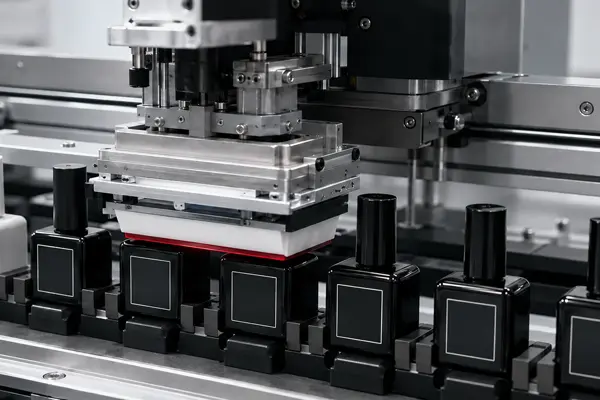
Using multi-color silk-screen printing and metallic hot-stamping machines, brand logos, product names, and net volume markings are printed directly onto curved or flat bottle surfaces with sharp edge definition and high ink adhesion.

STEP 5: BOTTLE QUALITY INSPECTION

Every batch of finished bottles undergoes visual defect screening, coating thickness checks, and cross-hatch adhesion / alcohol-rub testing. Bottles with pinholes, uneven spray, blurred print, or neck chips are rejected before entering the filling cleanroom.

STEP 6: BRAND LABEL MAKING

BRAND LABEL MAKING
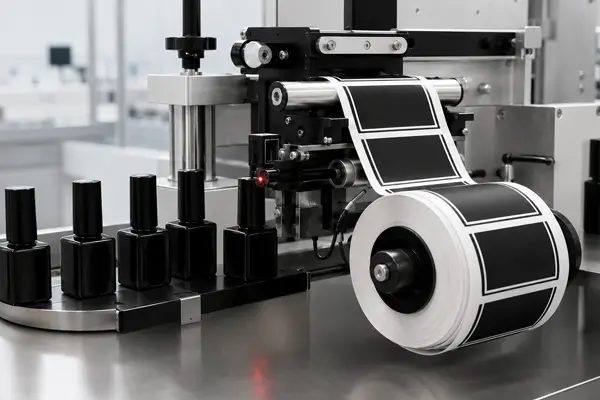
High-definition waterproof and oil-resistant PP/PET labels—including top-cap color-coded shade dots, batch codes, and regulatory ingredient lists (INCI, MSDS/CPNP compliance)—are die-cut and applied with automated labeling accuracy.

Rigorous Quality Control & Global Regulatory Compliance

Every batch of gel polish is backed by multi-stage laboratory testing, traceable batch retention, and full international safety documentation—ensuring consistent salon performance and smooth customs clearance across North America, Europe, and global markets.
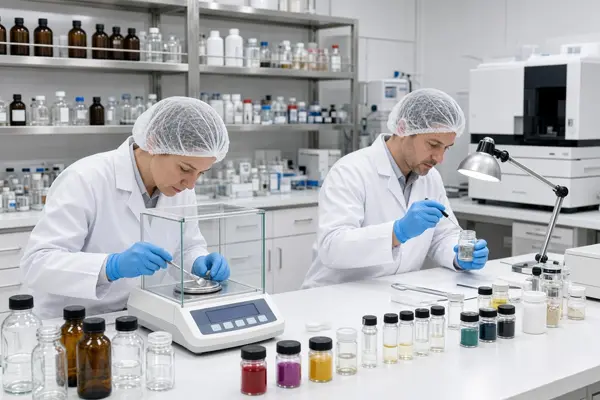
Inspection and Screening of Raw Materials upon Arrival at the Plant

The primary raw materials for nail gels include light-curable resins (such as polyurethane acrylates), reactive monomers, photoinitiators, pigments/color pastes, and various additives.
Key inspection parameters include: purity, moisture content, heavy metal limits (e.g., lead, arsenic), pigment particle size distribution, photoinitiator activity, and the review of supplier-provided Certificates of Analysis (CoA) and Material Safety Data Sheets (MSDS).
Any non-conforming raw materials must be quarantined and returned to the supplier to prevent downstream issues such as incomplete curing, yellowing, phase separation, or safety hazards.
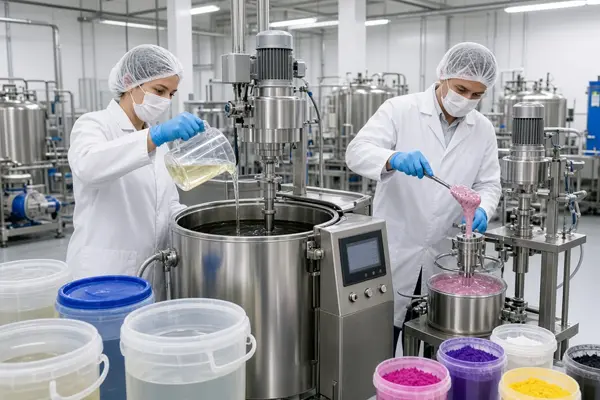
Formulation, Dispersion, and Process Monitoring

Inspection and Screening of Raw Materials upon Arrival at the Plant
After the raw materials are weighed, they proceed through the stages of mixing, milling, dispersing, and deaeration. Since the gel is sensitive to light and temperature, these processes must be carried out in a light-shielded or low-light, temperature-controlled environment to prevent premature polymerization. Key control points include: precise weighing (to the nearest gram), viscosity (typically maintained within a specific mPa·s range), uniform pigment dispersion (to avoid grittiness or color inconsistency), thorough deaeration, and color matching against a standard reference sample. Following processing—using equipment such as high-speed dispersers, three-roll mills, or other milling machinery—samples of the intermediate product are taken for testing. Throughout the process, temperature, shear force, and mixing duration are monitored in real time to ensure the stability of the formulation.
Filling, Packaging, and Final Pre-shipment Inspection

Filling, Packaging, and Final Pre-shipment Inspection

During the filling process, it is essential to control fill volume accuracy and sealing integrity. Opaque, UV-blocking bottles must be used to prevent premature curing during storage. Key inspection points include: bottle appearance, cap torque and sealing, label placement and information accuracy, applicator quality, and consistency of fill volume. Finished products must undergo 100% inspection—or a high-percentage sampling—for appearance, sealing, and labeling; the entire batch must also undergo a final performance verification. A comprehensive batch traceability system (from raw materials to semi-finished and finished products) must be established, alongside sample retention and shelf-life validation.

Have Anything To Ask Us?

Please give your inquiry in the form below, we will reply you in 24 hours.

Welcome To Contact Us

Please give your inquiry in the form below, we will reply you in 24 hours.